Article · The business of sport
Do you need to be the headline sponsor of the New York City Marathon?
TCS pays to put its name on the NYC Marathon, while Bandit and lululemon run their own events around it. How do you measure which sponsorship pays back?
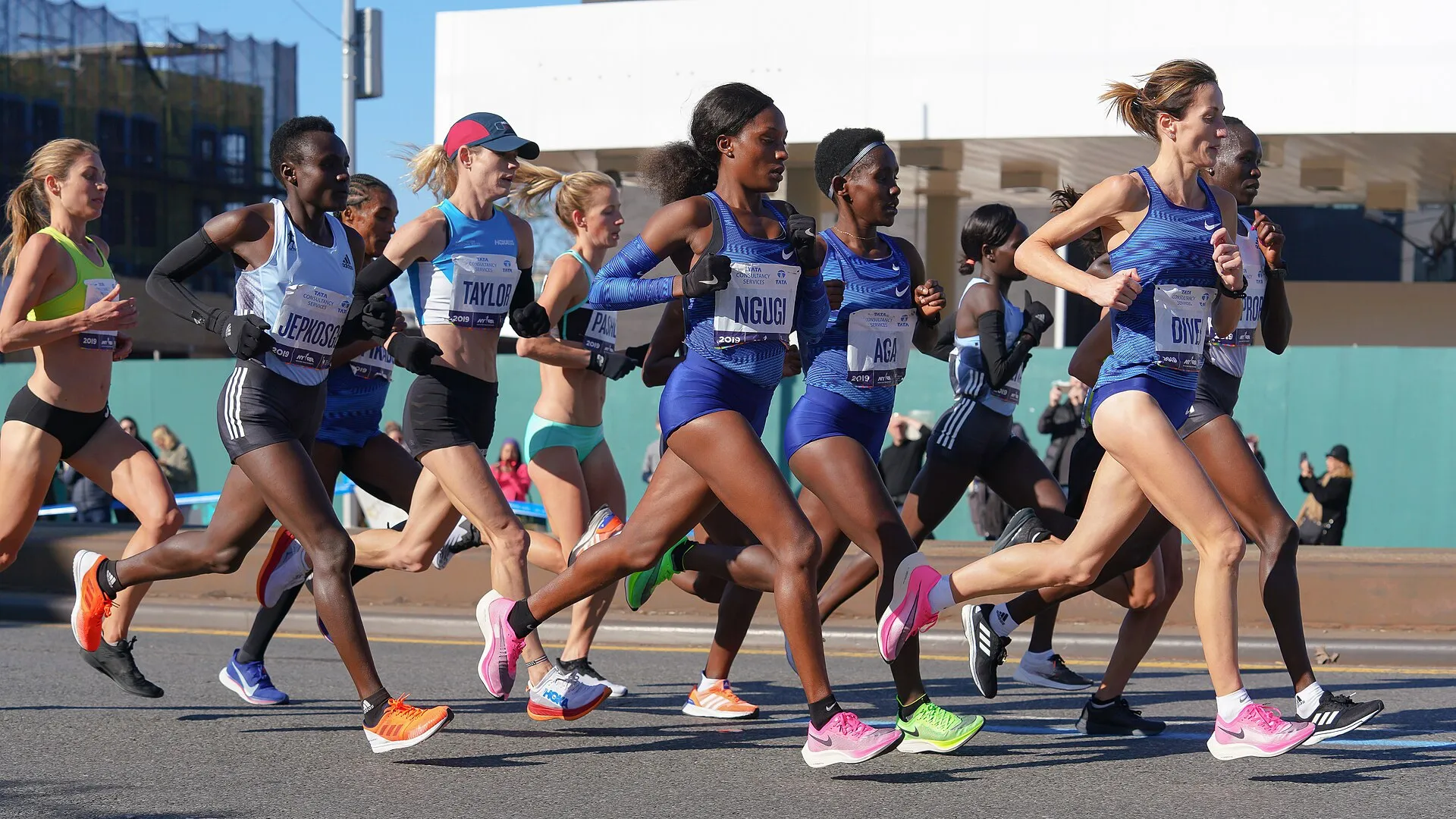
More than 50,000 people ran the New York City Marathon on Sunday. Every one of them had Tata Consultancy Services, the Indian IT company better known as TCS, printed across their bib, and the official kit was New Balance. Those are the two headline deals, and both run for years.
But the week around the race was full of brands that paid the organisers nothing. Bandit, the New York running brand, ran a pop-up on Grand Street, a Saturday shakeout run from a bagel shop and a cheer party on the course. lululemon hosted a shakeout from its Hudson Yards store, a cheer spot at Mile 14 with November Project and free medal engraving on Fifth Avenue the day after, according to Marathon Weekend. Celsius opened a pop-up on the route in Brooklyn, and Vuori, Saatva and H&M all ran events of their own, Modern Retail reported. The men’s race was won by Andreas Almgren, a Swede on his marathon debut, in Nike shoes.
So the question I keep coming back to is whether being the headline sponsor is worth it, or whether you’re better off on the edge of the event, activating your own community and building something off the back of it.
What the headline sponsor is paying for
The race is run by New York Road Runners (NYRR), a non-profit, so its accounts are public. Its latest tax filing, published on its own site, covers the year to March 2025, which includes the 2024 marathon. Income was $132.7m.
| Where NYRR’s money came from | Amount | Share |
|---|---|---|
| Donations, grants and sponsorship | $61.6m | 46% |
| Race entry fees | $52.8m | 40% |
| Investments | $7.6m | 6% |
| Other race and class income | $6.2m | 5% |
| Royalties, rent and other | $4.5m | 3% |
The filing doesn’t split sponsorship out, and nobody publishes what TCS pays. Its deal runs to 2029. Sportico reported in 2022 that TCS would spend up to $40m a year across all of its marathon sponsorships, which then numbered more than 14 races. Even spread evenly, that’s millions a race. NYRR’s six biggest races cost $67.0m to stage and brought in $48.9m directly, so sponsors and donors fill a gap of around $18m.
For that money the headline sponsor gets its name on every bib, the broadcast, the finish line and the expo. Every one of the biggest marathons sells the same two things, a title and a shoe and kit partner.
| Race | Title sponsor | Shoe and kit partner |
|---|---|---|
| New York | TCS | New Balance (since 2017) |
| London | TCS (since 2022) | New Balance (since 2017) |
| Boston | Bank of America | adidas (since 1989, signed to 2030) |
| Chicago | Bank of America | Nike (since 2008, signed to 2028) |
| Berlin | BMW, with Generali from 2027 | adidas |
| Tokyo | Tokyo Metro (presenting partner) | ASICS (since 2007) |
| Sydney | TCS | ASICS (presenting partner) |
Sources: B.A.A., running.news, Marathon Handbook, Tokyo Marathon, Athletics Weekly and TCS.
What the brands on the edge are paying for
I’d guess a pop-up, a shakeout run and a cheer spot cost somewhere around $10,000 to $20,000 for a brand that already has a shop and a run club. That’s a different order of money from the headline deal, and it buys most of what a running brand actually wants: a week in front of runners who are in the city, nervous and spending, and a reason to talk to its own community.
The organisers have noticed. This year NYRR told run clubs that only official sponsors’ brands could appear in their cheer zones on the course, Marathon Handbook reported, after Celsius ran one in Brooklyn in 2025 without being a sponsor. You don’t write that rule unless the edge is taking something from the people who pay.
How do you tell who got more back?
This is the hard part, because almost nobody publishes anything.
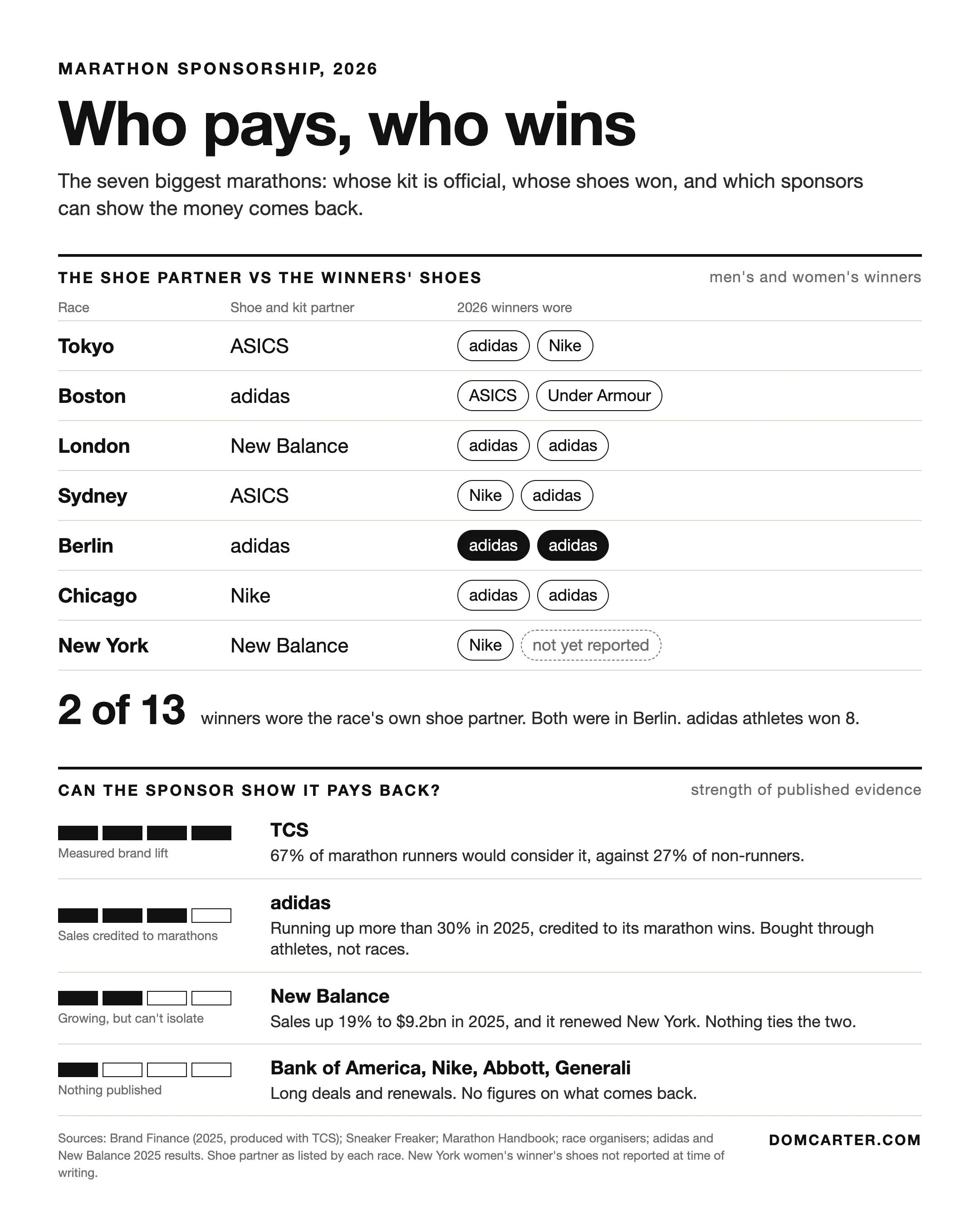
TCS is the exception. Brand Finance found that 46% of marathon runners are familiar with TCS, against 16% of people who don’t run marathons, and 67% would consider using it, against 27%. That’s a measured lift, although Brand Finance produces its marathon report in partnership with TCS, and it measures awareness, not contracts won.
Recall is where it gets messy for the headline sponsor. People are poor at remembering who paid. In a Toluna survey during the London 2012 Olympics, 37% of Americans named Nike as an Olympic sponsor and 24% named adidas, which was the one actually paying. If that happens at the Olympics, a brand with a cheer party at Mile 18 has a decent chance of being remembered as part of the marathon too.
The shoes tell the same story. Only 2 of the 13 big-marathon winners this year whose shoes have been reported wore the race’s own shoe partner, and both were in Berlin. adidas runners won 8, mostly at races where another brand paid for the kit, according to Sneaker Freaker and Sunday’s result. adidas puts its running growth of more than 30% in 2025 down to those wins in its annual results, and it bought them through athletes, not races. New Balance, meanwhile, grew sales 19% to $9.2bn, according to Jing Daily, and renewed New York, but nothing ties the two.
The brands on the edge don’t publish anything either, but they have one advantage. It’s their own event, with their own till, their own sign-up list and their own content, so they can see what came back without commissioning a study.
So is it worth being the headline sponsor?
For a company like TCS, probably yes. An IT consultancy can’t get into a marathon any other way, and Brand Finance found that brands from outside sport get a bigger lift than sports brands do. The people TCS sells to also run: 14% of marathon runners in that research were in the C-suite.
For a running or lifestyle brand whose customers are already at the start line, I’m less sure. The edge is cheaper, it’s closer to the community, and the effect is easier to see. The risk is that races keep tightening the rules to protect the people who pay, so the cheap route may not stay cheap.
If you’re weighing up a race deal, price the alternative first. Work out what the same money would do spent on the people who already run with you, and agree how you’ll measure both before you sign. It’s the same advice I gave when Google’s AI answers started costing advertisers clicks: find out what you’re actually getting before you move the money. If the headline deal can’t beat the edge on a measure you set in advance, you’re paying a lot to have your name on the bib.