Article · The business of sport
Ironman 70.3 Málaga 2026: race report and course guide
Ironman 70.3 Málaga race report with the swim course, bike route and run course mapped from race day. Splits, power, and what I'd change next time.
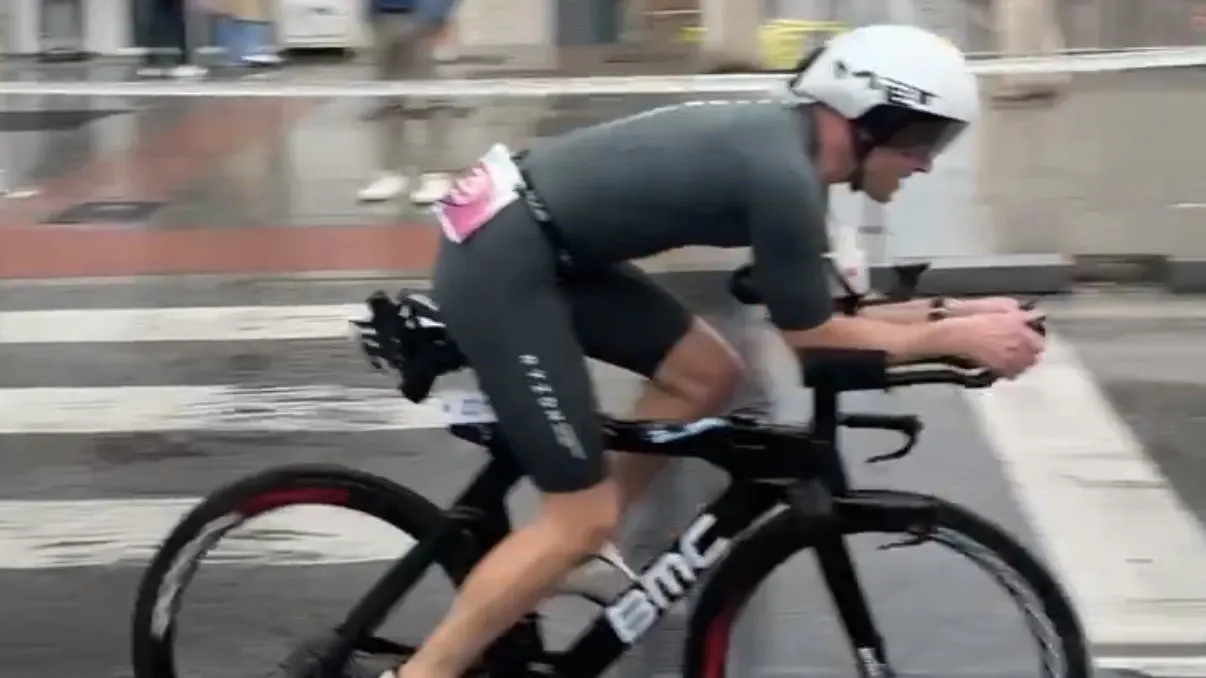
5:23 on a day that had thunder, standing water, a bottle rolling into the gutter at 800 m and a bike split I’d have taken in any weather. Ironman 70.3 Málaga ran for the first time on 18 October 2026, replacing Marbella as the last Spanish 70.3 of the season. I finished 47 seconds off my 70.3 best, with the fastest bike I’ve ever ridden and a run fuelled on three bars and a borrowed electrolyte bottle. Here’s how it went, and what the course is like if you’re thinking of racing it.
Ironman 70.3 Málaga course at a glance
The course details below come from the official Athlete Guide. The maps further down are my own GPS tracks from race day.
| Leg | Distance | Course | Elevation |
|---|---|---|---|
| Swim | 1.9 km | One loop inside the Port of Málaga | Flat water |
| Bike | 90 km | One out-and-back loop east along the coast to Torrox Costa, on closed roads | 220 m |
| Run | 21.1 km | A 2 km link, then two loops along Muelle Uno and the Paseo Marítimo | 11 m |
| Transition | One transition area on the Paseo del Parque, used for T1 and T2 |
Bike aid stations are at 18, 36, 56 and 75 km. Run aid stations come roughly every 2.5 km. The cut-offs are 1 hour 10 for the swim, 5 hours 30 to the end of the bike and 8 hours 30 overall.
Before the start
The morning went to plan, which is rarer than it sounds. Up at 05:30, a bagel and a half with honey and banana, a coffee and a Red Bull Light, and water sipped until 08:00. Toilet an hour out, and again at 30 minutes. Nothing to fix.
The one loose end was a front brake that had been kissing the rim since Saturday. Transition at 07:00, wheel out, wheel back in, skewer tight, spin. Done. The bike went to the rack with 160 g of carbs mixed into the front bottle, two cages empty at the back, and a plan to fill them at the first aid station. Hold that thought.
Ironman Málaga swim course: 36:48
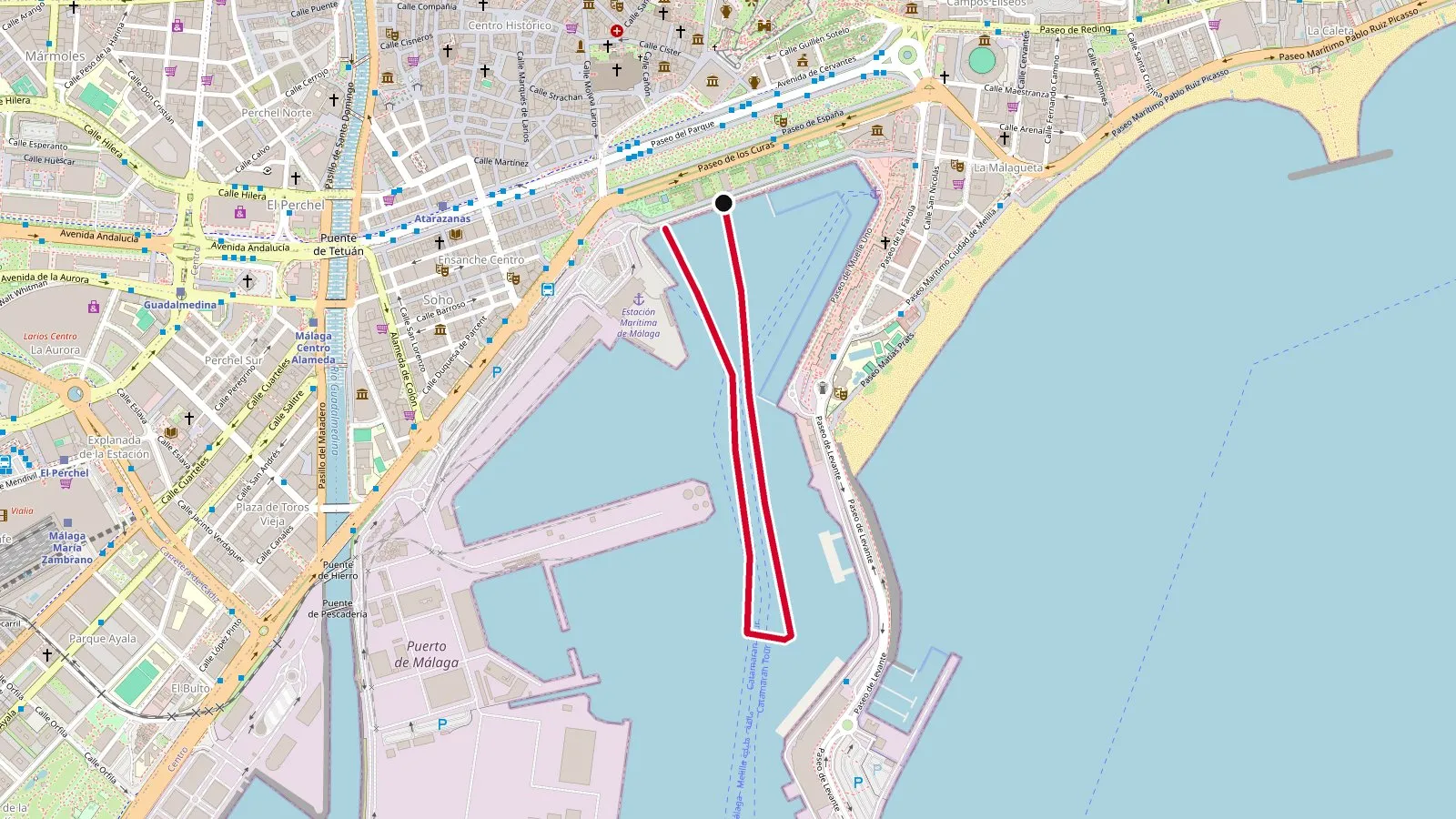
Map: my GPS track from race day. Base map © OpenStreetMap contributors.
The Ironman Málaga swim is a single 1,900 m loop in the sheltered water of the old port, starting below the Paseo del Parque. You swim south down the harbour, turn, and come back up the other side. There’s no swell to deal with, the Athlete Guide expected the water at around 20°C, and wetsuits were legal.
The water was the best part of the day. Warm, flat, salty enough to float. I seeded with the 35 to 38 minute group and that was the mistake: it was the busiest pen in the race. I was kicked in the face twice, which is fine, and my goggles kept lifting and letting water in, which isn’t. Every time I stopped to fix them I lost the rhythm I’d just found.
The real cost was never getting clean water. I’d find a stroke for 200 m, hit a wall of feet, jostle for position, and find it again. In 1,900 m I probably swam 600 m the way I wanted to. By the last 400 m I was tired and just wanted the ramp.
It was my slowest 70.3 swim by a minute and a half, and almost none of it was fitness. Next time I’ll seed one group faster, start wide, and wear a double cap over the goggle strap.
T1: 7:49
Málaga’s transition is two long lines through the Parque. Wetsuit off, helmet on, then a 700 m run to the bike past people pushing theirs, with nowhere to get by. Strava has the whole transition at nearly a kilometre. At Bolton my transitions took about four minutes each; here a good one was six. There was nothing to do about it except know it was coming, and I knew.
Ironman Málaga bike route: 2:43:50
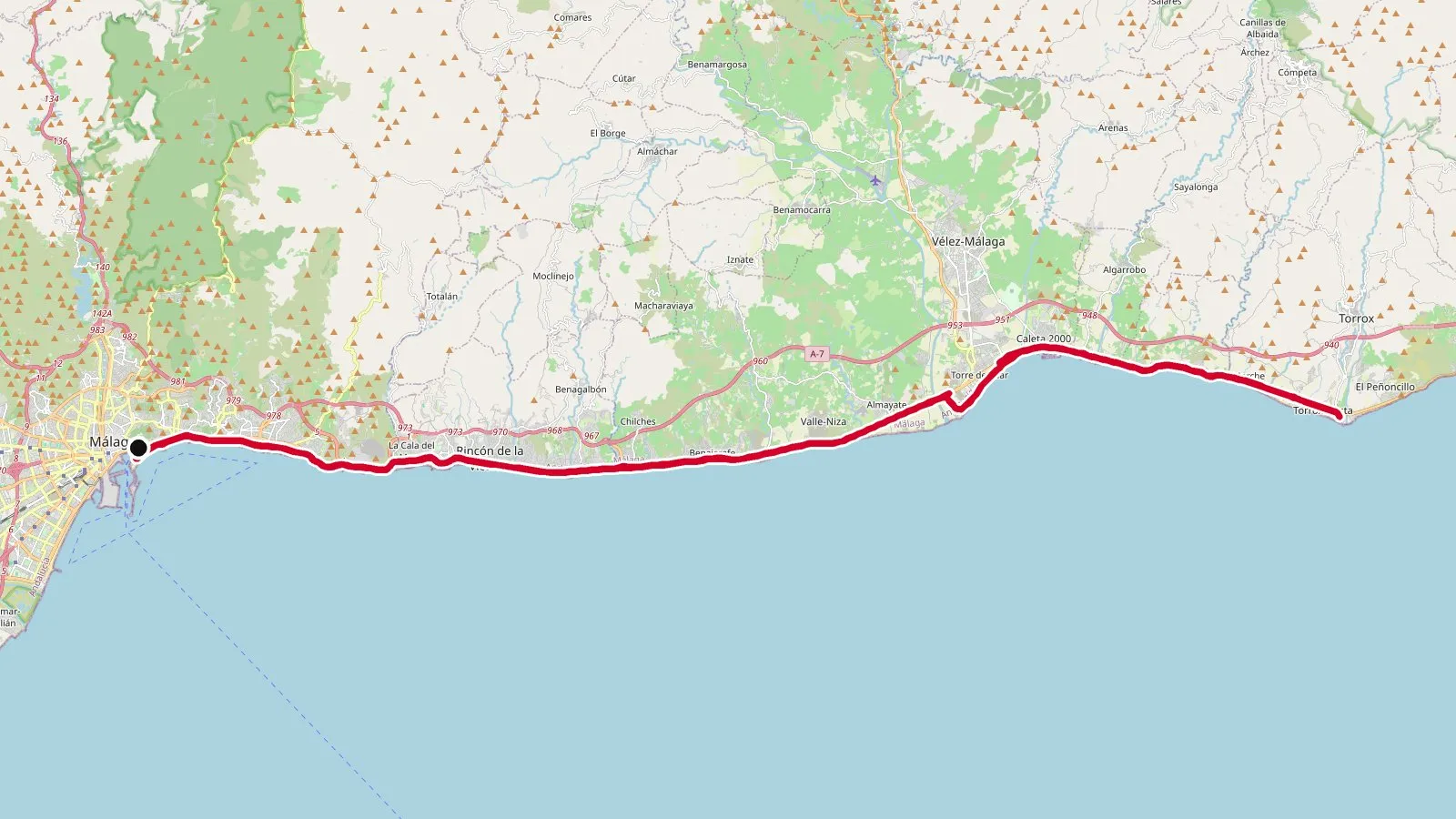
Map: my GPS track from race day. Base map © OpenStreetMap contributors.
The Ironman Málaga bike route is one 90 km loop, out and back along the coast on closed roads. You head east from the city through Rincón de la Victoria, Torre del Mar and Algarrobo, turn at Torrox Costa after about 45 km, and ride the same road home. The Athlete Guide lists 220 m of climbing, and my watch said 364 m. Either way it’s a flat course. What slows you down is the long speed bumps through the coastal towns.
It was pouring as I left transition. I didn’t mind that. What I minded was the speed bump 800 m in that launched my front bottle, the one with every gram of carbohydrate I’d planned for the ride, into the road. I stopped, propped the bike on the pavement, ran back and picked up an empty bottle. 200 m later a second bump took the straw. All my fuel and all my fluid were gone before the first kilometre, and the rear cages were empty because I’d planned to fill them at 18 km.
The 18 km aid station handed out small bottles that fell straight out of the cages. I squirted them into my mouth, grabbed a Precision electrolyte bottle because it fitted the front mount, and that was my hydration for the next 70 km: about a litre, plus a few mouthfuls of water. For food I had the three Maurten bars in my pocket, roughly 40 g of carbs an hour against a plan of 80. At the 56 km aid station I grabbed a second electrolyte bottle, hit another speed bump and watched that one go too.
The course itself was carnage. Thunder, lightning, and standing water pooled either side of the long speed bumps so you couldn’t see the potholes. People were sliding out, there were wheels off at the roadside and punctures everywhere. I rode it carefully and still got round faster than I ever have: 32.8 km/h, 164 W average, 174 W normalised, heart rate 152. The last 15 km were the strongest, 185 W normalised at 95 rpm, because I knew the transitions had cost me and wanted the time back.
On paper it’s my best 70.3 bike by nine minutes, although Bolton had far more climbing. In the context of the day, with no crash, no mechanical and half the fuel, it’s the ride I’m proudest of. It also set up the run to hurt.
T2: 7:09
T2 was the same long walk in reverse, back along the Paseo del Parque to the run bags.
Ironman Málaga run course: 1:47:29
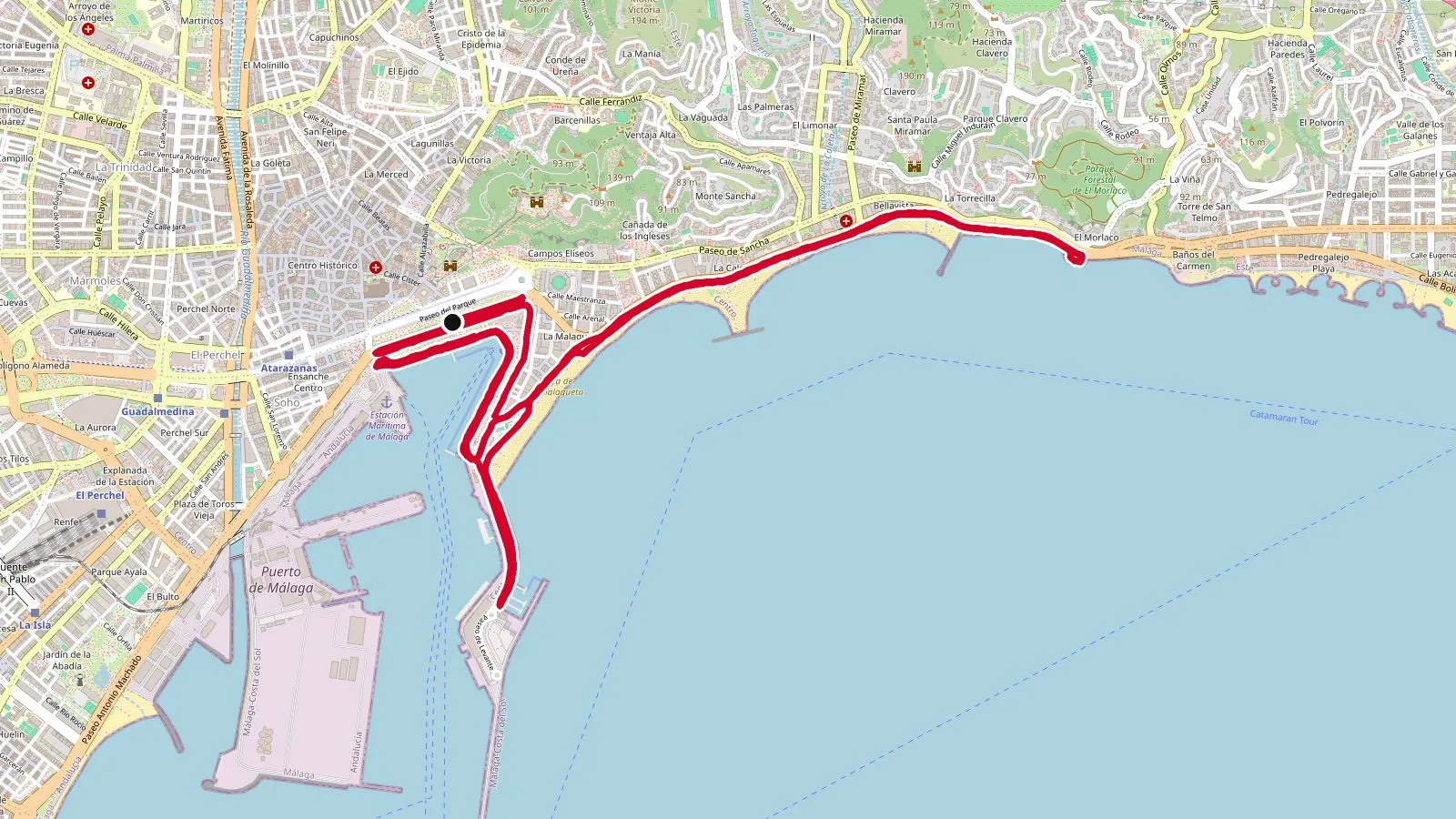
Map: my GPS track from race day. Base map © OpenStreetMap contributors.
The Ironman Málaga run course starts with a 2 km link, then two loops. Each loop goes down Muelle Uno towards the lighthouse and back, then east along the Paseo Marítimo past La Malagueta and La Caleta beaches to El Morlaco, where you turn. It’s flat and it’s by the sea the whole way. The finish is in the Palmeral de las Sorpresas, back by the port.
The shoes went on and my feet hurt immediately. Wet feet, nearly three hours of pushing on the pedals, and lock laces set on dry, rested feet that morning. I stopped two or three times to loosen them. It didn’t help much, and it took 7 or 8 km to run the ache off. By 10 km I felt normal. By then the sun was out and it was 24 to 25°C, having started the day soaked.
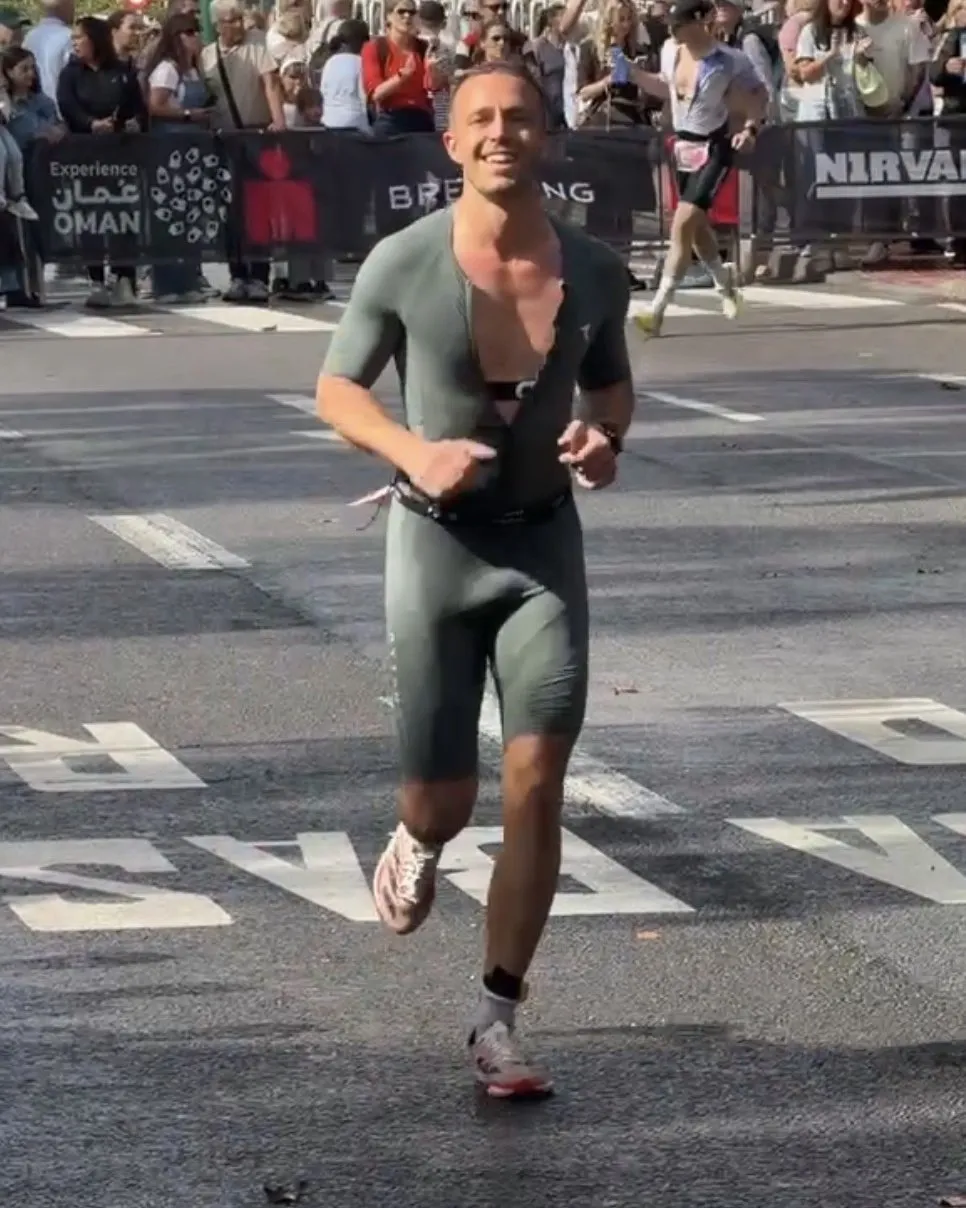
I knew I was behind on fuel and fluid, so the plan became simple: walk every aid station, drink properly, take a gel. Three gels in quick succession after nearly three hours with almost nothing was too much for my stomach, and the cramps arrived at the start of the second loop. I dropped the gels and stuck to water and electrolytes. Knees and shins complained in the last 5 km.
The frustrating part is the number. 5:06/km, heart rate flat at 152 the whole way, and a 1:27 half marathon in my legs from Shoreditch a month earlier. The engine wasn’t the limit. Fuel, feet and the walks were. Still, the pace barely moved from first kilometre to last, which I’ll take on that day.
Is Ironman 70.3 Málaga a fast course?
Mostly, yes. The swim is sheltered, the bike route is flat and closed to traffic, and the run has almost no climbing. I rode my fastest 70.3 bike split here in heavy rain. The catch is the transitions. Each one is close to a kilometre on foot, so expect them to cost a few minutes more than at most races. If you’re chasing a time, the speed bumps on the bike are the other thing to plan for. Secure your bottles before you start.
The numbers
Times are from my watch; the official results differ by seconds.
| Leg | Málaga 2026 | Bolton 2024 (previous best) | Notes |
|---|---|---|---|
| Swim | 36:48 | 34:42 | 1:57/100 m, congested |
| T1 | 7:49 | 5:03 | ~950 m transition |
| Bike | 2:43:50 | 2:52:45 | 164 W avg, 174 W NP, HR 152, 32.8 km/h |
| T2 | 7:09 | 3:14 | ~950 m again |
| Run | 1:47:29 | 1:46:24 | 5:06/km, HR 152 |
| Total | 5:23:15 | 5:22:28 | 47 s off a PB |
Take out the transitions and it was my fastest 70.3 racing time by nearly six minutes. I spent 15 minutes between disciplines, against 8 at Bolton, and that is the whole gap to a personal best.
What I’d do differently
- No single point of failure on fuel. Carbs in at least two places: the drink, plus gels taped to the frame. Every cage full from the start, with aid stations for topping up, not supplying.
- Secure the front bottle. A tighter cage or a band over the bottle, tested over a speed bump at home. Cable-tie the straw.
- Seed the swim one group faster and start wide. Being overtaken beats fighting through slower feet for 1,900 m.
- Goggles under the cap, every time. Double cap if the strap still moves.
- Loosen the bike shoes over the last 3 km, and set the run laces a notch looser than feels right in the bag.
- Walk the transition routes the day before and budget for them. Málaga’s were a kilometre each. That’s a 6-minute T1, not a 4-minute one, and I’d rather know.
- Run durability. The gap between a 1:27 open half and 1:47 off the bike is the next big block of work. More long runs, more running off the bike, and heavy lifting for the legs.
What’s next
Lake Como half marathon on 6 December. Six weeks of run-focused training with the bike held in the background, a target that’s a stretch, and a course that’s undulating rather than flat. Then a proper swing at sub-5 next season, on a day when the bottles stay in the cages.