Playbook · Marketing that works
Honest luxury: what Chinese brands are teaching the luxury industry
Honest luxury explained: how Chinese luxury brands like Laopu Gold, Songmont and Icicle are growing while Western houses shrink, and who is most exposed.

Written after Professor Stéphane JG Girod presented his research at the DAGORA e-Luxury Summit at IMD in Lausanne, 24 November 2026.

The short version
- Chinese luxury brands are growing in China while most Western houses shrink there. Laopu Gold's revenue rose 221% in 2025, according to the IMD research.
- They win on what IMD calls honest luxury: real craft and real value at a fairer price, sold by brands that would rather be called cultural than luxury.
- Their marketing runs on community, not campaigns: long articles over viral video, small creators over paid celebrities, and a following built online before any store opens.
- Western brands can't borrow Chinese heritage without it looking tacky. Their answer has to come from their own story told properly, and from justifying the price.
- The houses that rely most on Chinese shoppers are the most exposed. Gucci is already feeling it, and Burberry has the most to lose if the shift speeds up.
On 24 November I sat in a room at IMD in Lausanne and listened to Professor Stéphane JG Girod. He was presenting research I think every luxury marketer should read. It’s called Honest luxury: How Chinese brands are redefining the luxury playbook. He wrote it with IMD researcher Yunfei Feng, and Pablo Mauron of Digital Luxury Group (DLG) wrote the chapter on marketing. It’s free from IMD’s luxury research hub.
In short, a group of Chinese brands are growing fast at home. Most of the big Western houses are shrinking there. They’re doing it with real craft, a fairer price and a community built around the brand. This playbook picks out the ideas that matter most to anyone marketing a premium brand, and adds where I think they land. The full research has the detail. All figures below come from the paper unless I say otherwise.
What is honest luxury?
Honest luxury is the authors’ name for a different way of selling expensive things. They sum it up as less status and more meaning, less heritage and more relevance, less exclusivity and more community. The product has to justify the price on its own merits. Craft, materials, usefulness and service carry the weight that the logo and the story used to carry.
What surprised me most is that many of these brands don’t want to be called luxury at all. The founders Girod interviewed see themselves as cultural brands. Part of that is politics. Showing off wealth isn’t welcome in China right now. Part of it is genuine. As To Summer’s co-founder Shen Li put it to the researchers, “We see ourselves as a cultural brand.”
The paper lists five habits these brands deliberately avoid, and they read like a list of complaints about modern Western luxury:
- prices that have drifted away from the quality of the product (the logo tax)
- marketing everywhere, all the time, until the brand feels common
- leaning on celebrity ambassadors
- new products held back by the weight of the archive
- stores that feel cold, or service that changes from one visit to the next
Here’s how the two models compare.
| The Western heritage model | Honest luxury | |
|---|---|---|
| Where the price comes from | The name, the history, the story | The craft, the materials, what the product does |
| Typical markup on cost | 8 to 10 times | 4 to 5 times |
| Marketing | Big campaigns, celebrity ambassadors | Long-form stories, smaller creators, reviews |
| Stores | The same design in every city | Each one built around its location |
| Relationship with customers | Shape their taste | Listen and build what they ask for |
| What it wants to be called | Luxury | A cultural brand |
The markup figures come from a Bernstein report the paper quotes. That gap is the whole story in two numbers.
Why are Chinese luxury brands growing while Western ones shrink?
China’s luxury market as a whole has gone backwards since COVID. But underneath the headline, the paper shows Chinese brands taking share from the established houses. Chinese shoppers spent €65bn on personal luxury goods in 2025, about 18% of the world total, so it’s a big pot to lose.
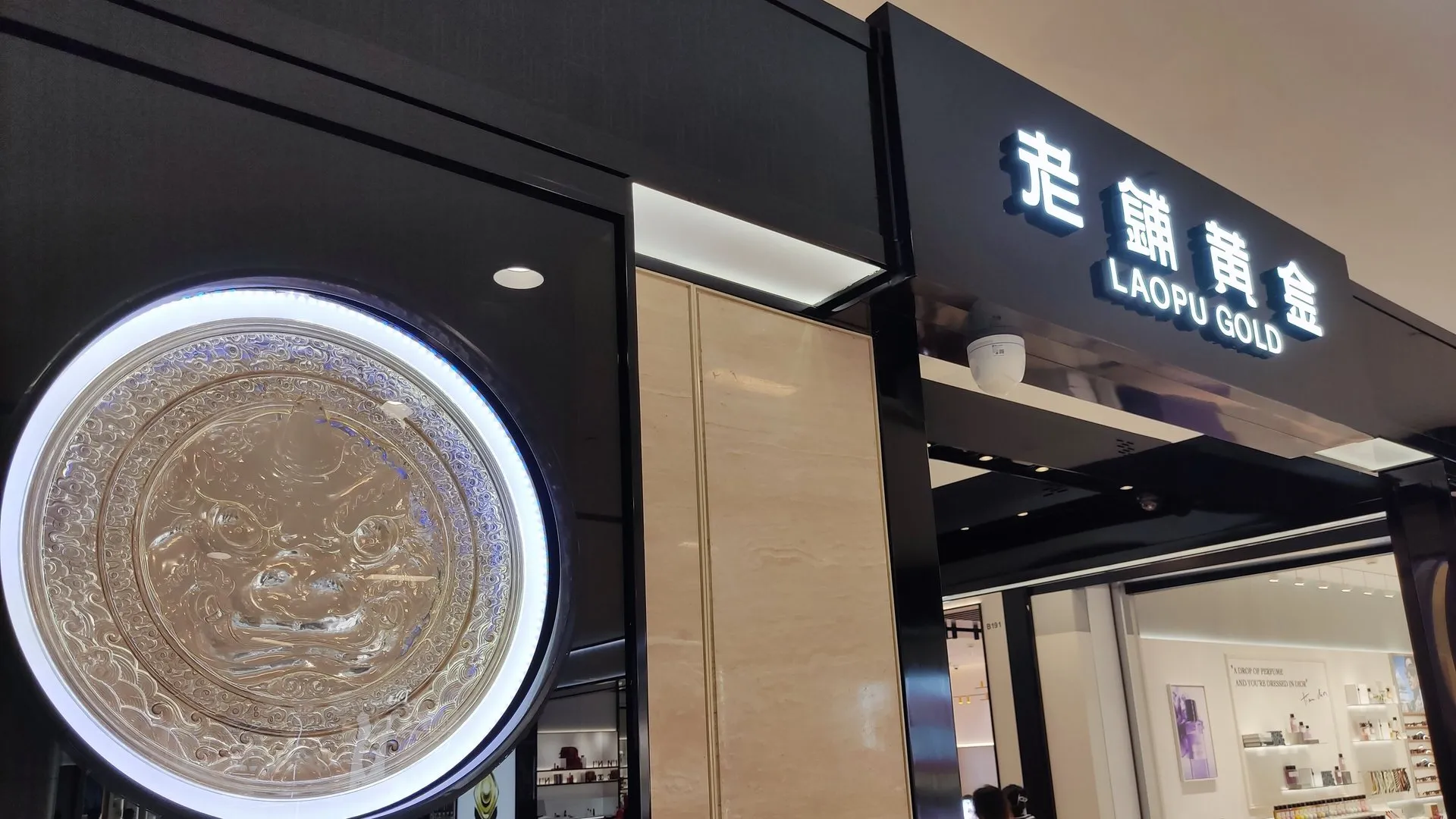
The numbers from inside it are striking. Laopu Gold, which sells gold jewellery made with old imperial techniques and gets called “the Hermès of gold”, grew revenue 221% in 2025. Songmont’s online bag sales rose 90% in the first nine months of 2025. Online sales of Western leather brands fell by 40% to 50% over the same period. Even Bernard Arnault, who runs LVMH, visited Laopu Gold and Songmont stores in Shanghai in September 2025. That tells you how seriously the big groups are taking it.
For me, the most interesting part is where they’re winning. A lot of this growth is coming from the middle-class end of luxury. These are the people who would once have bought their first designer bag or their first good watch. The paper notes that by dropping their entry-level products, many Western houses left that space open. Chinese brands walked into it with products that feel premium, at prices that feel fair.
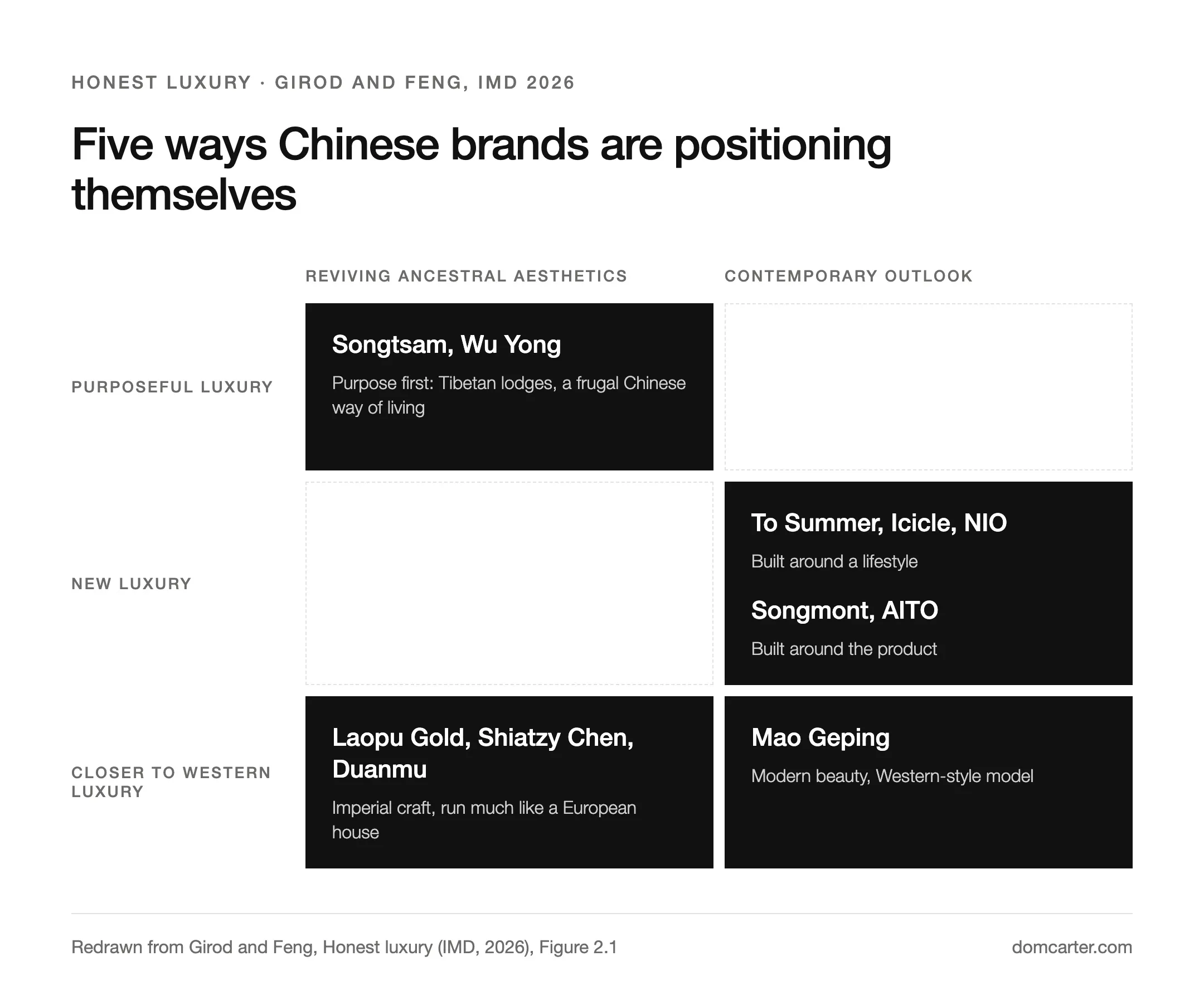
The paper groups the brands it studied into five positions. Some sit close to the Western model with ancient Chinese craft, like Laopu Gold. Some are built around a modern lifestyle, like Icicle and NIO. Others lead with purpose, like the Tibetan hotel group Songtsam.
Can Western brands borrow Chinese heritage?
I don’t think they can, and this is the point that stuck with me most from the talk. Chinese brands are drawing on their own history: imperial goldsmithing, Tang dynasty woodwork, silk embroidery, calligraphy and poetry. When a Chinese brand does that, it reads as pride. When a Western brand tries it, it tends to look tacky.
The paper makes the same point more politely. It mentions Western brands building stores modelled on Beijing courtyard houses, and the capsule collections that appear every Lunar New Year. Its verdict is that these can come across as imitation rather than something the brand genuinely understands. It also picks on a recent Miss Dior advert, saying its flower-filled Paris is one few Parisians would recognise.
That last example is the useful one. The answer for Western houses isn’t to pretend to be Chinese. It’s to tell their own story properly, with real depth about where they come from, instead of a postcard version of it. Authenticity is the one thing a competitor can’t copy, and Chinese brands have built their foundations on it.
How do Chinese luxury brands do their marketing?
This is DLG’s chapter, and it’s the part I’d hand to any marketing team. Mauron’s team tracked the brands across China’s main platforms (RED, Weibo, Douyin and WeChat) using DLG’s own brand data. A few things stand out.
They choose depth over reach. Laopu Gold barely uses short video. Its strongest channel is long articles on WeChat, which get a median of more than 20,000 reads each. On WeChat, an article only spreads when subscribers share it with friends, so those numbers mean real readers, not a lucky algorithm.
They publish as much as the big houses, and pay creators far less. Songmont posted more than 70 times a month across Chinese platforms. That’s slightly ahead of Gucci and Hermès, and well ahead of Louis Vuitton’s 50 or so. The difference is in paid influence. Western houses keep a steady stream of big and mid-sized paid creators. The Chinese brands lean on newer creators, product-focused posts and genuine reviews.
They name things so people can find them. Songmont gives its collections distinctive names like Luna, Yore and Drippy. Its Luna line alone gets more Google searches each month than four of the other brands studied do in total. Laopu Gold’s Vajra collection shares its name with a Buddhist ritual object, which makes it much harder to own in search.
The common thread is community. NIO’s president told the researchers the company sees its customers as “users” in a long-term relationship rather than people who pay once. I think that’s why these brands have a stronger foundation than many real luxury houses: the relationship comes first and the sale follows. It’s the same lesson as paid media as a creative test lab. There, a premium brand won a younger audience by listening before it spoke.
How are Chinese luxury brands going abroad?
Most are testing the water through social media before they spend money on stores. Songmont now has around 615,000 followers on Instagram, more than on any single Chinese platform, despite having almost no shops in the West. Demand travels before the brand does.
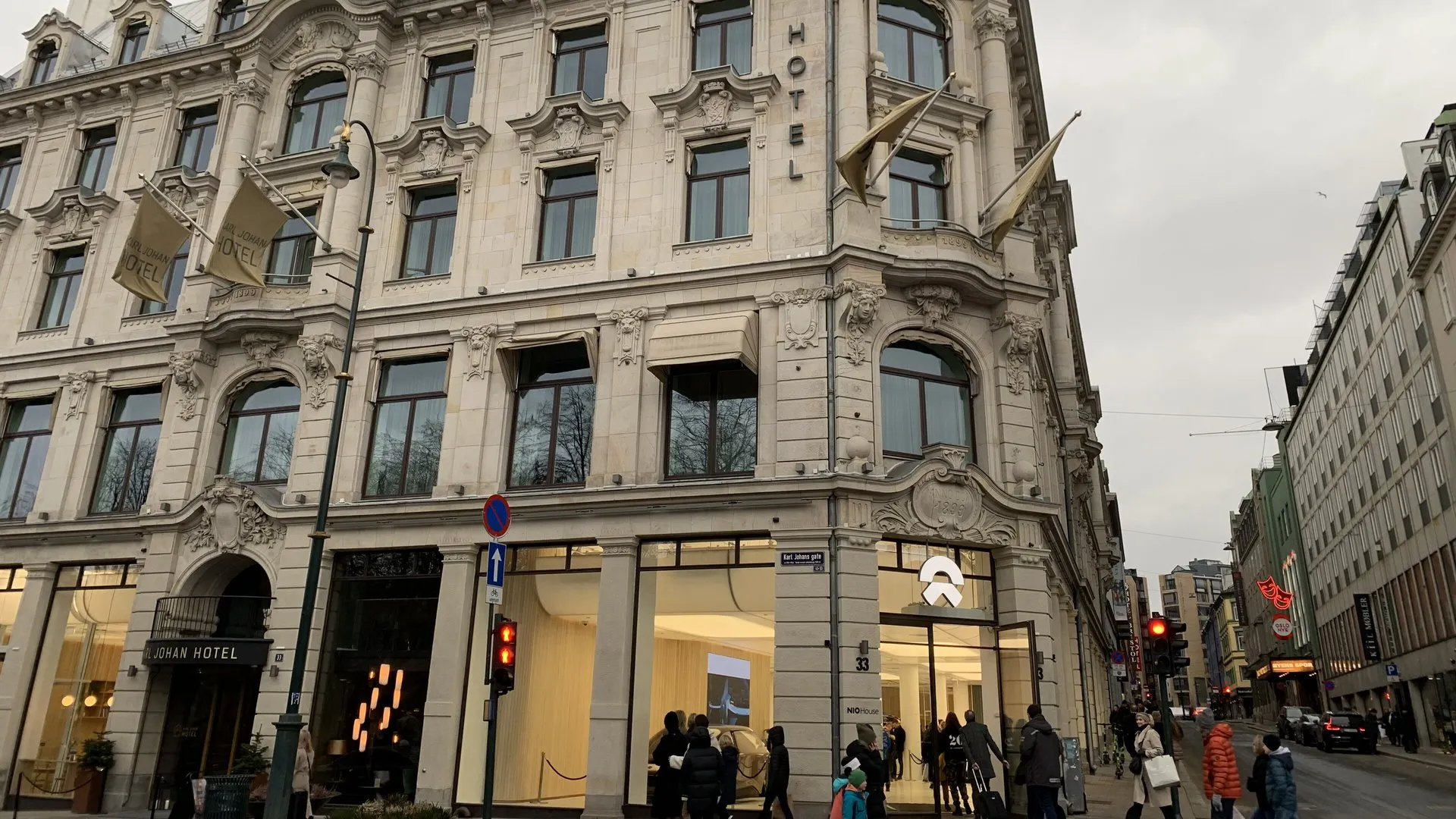
Photo: Premeditated, CC BY-SA 4.0, via Wikimedia Commons.

The paper describes two routes. Pane, a Shanghai sneaker label, plays down where it comes from. Its website and Instagram look like any independent European brand, and international visitors make up more than 30% of its sales in Shanghai stores. Songmont and the fragrance house Documents do the opposite and make their Chinese identity the point of the brand, everywhere they appear.
Where they go first depends on who they sell to. Younger brands head for South Korea and Thailand, where Chinese collectible toy shops such as Pop Mart run more than 60 stores. Premium fashion goes to Europe: Labelhood ran a pop-up at Harrods for Chinese New Year 2026, and Icicle has three flagship stores in Paris.
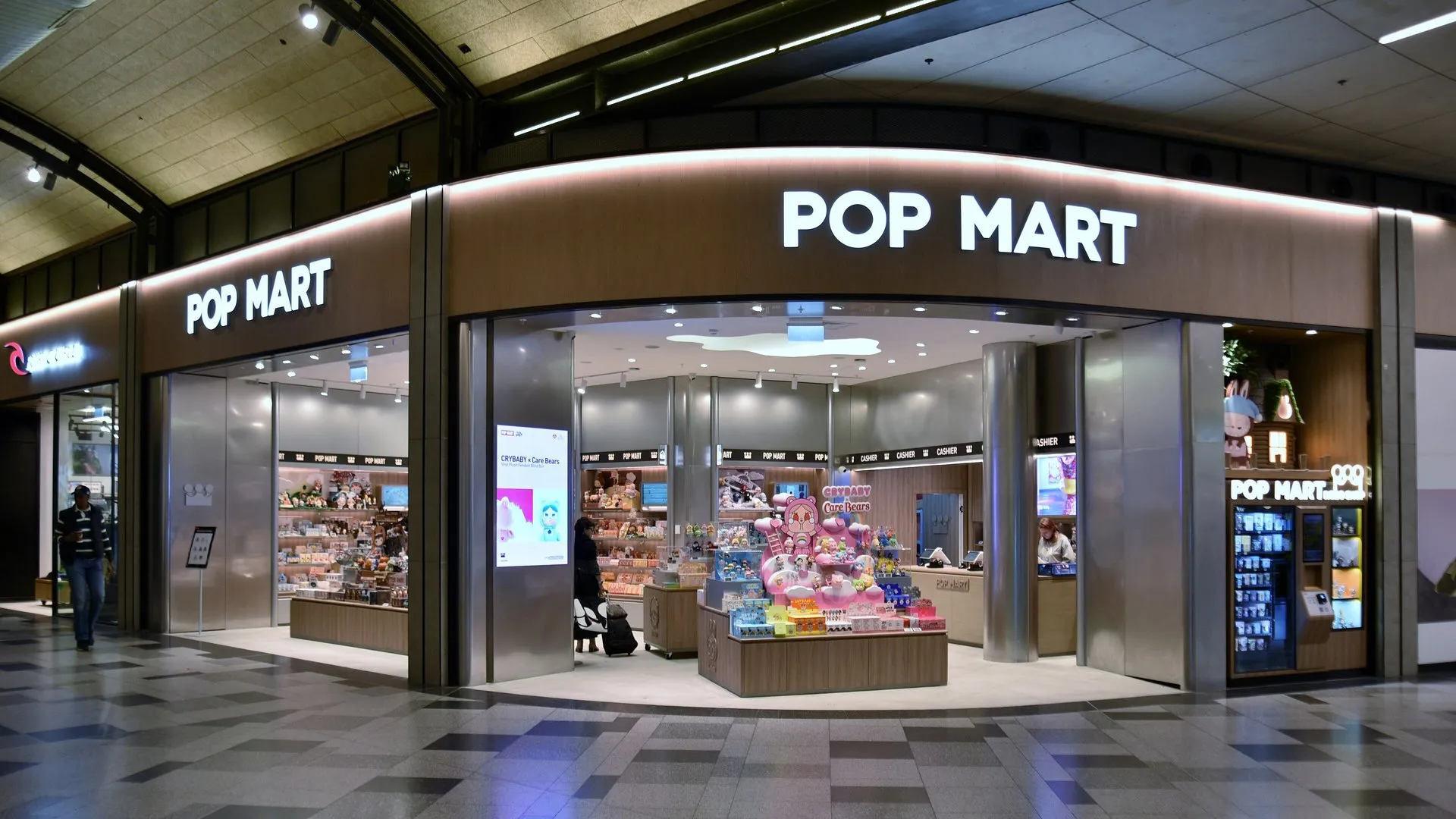
Photo: Bahnfrend, CC BY-SA 4.0, via Wikimedia Commons.

The paper is honest about the weak spots too. Most of these brands are young and barely known outside China. They have no shared industry body like France’s Comité Colbert, and few publish proper sustainability reports. They also struggle to get space in the best malls, department stores and airports. I’m curious to see whether Western shoppers will turn their noses up at a Chinese fashion house, whatever the quality. That snobbery could be the biggest barrier of all, and it won’t show up in a spreadsheet.
The price gap is the other thing to watch. Icicle shared its own comparison for a women’s cashmere coat, and the paper published it.
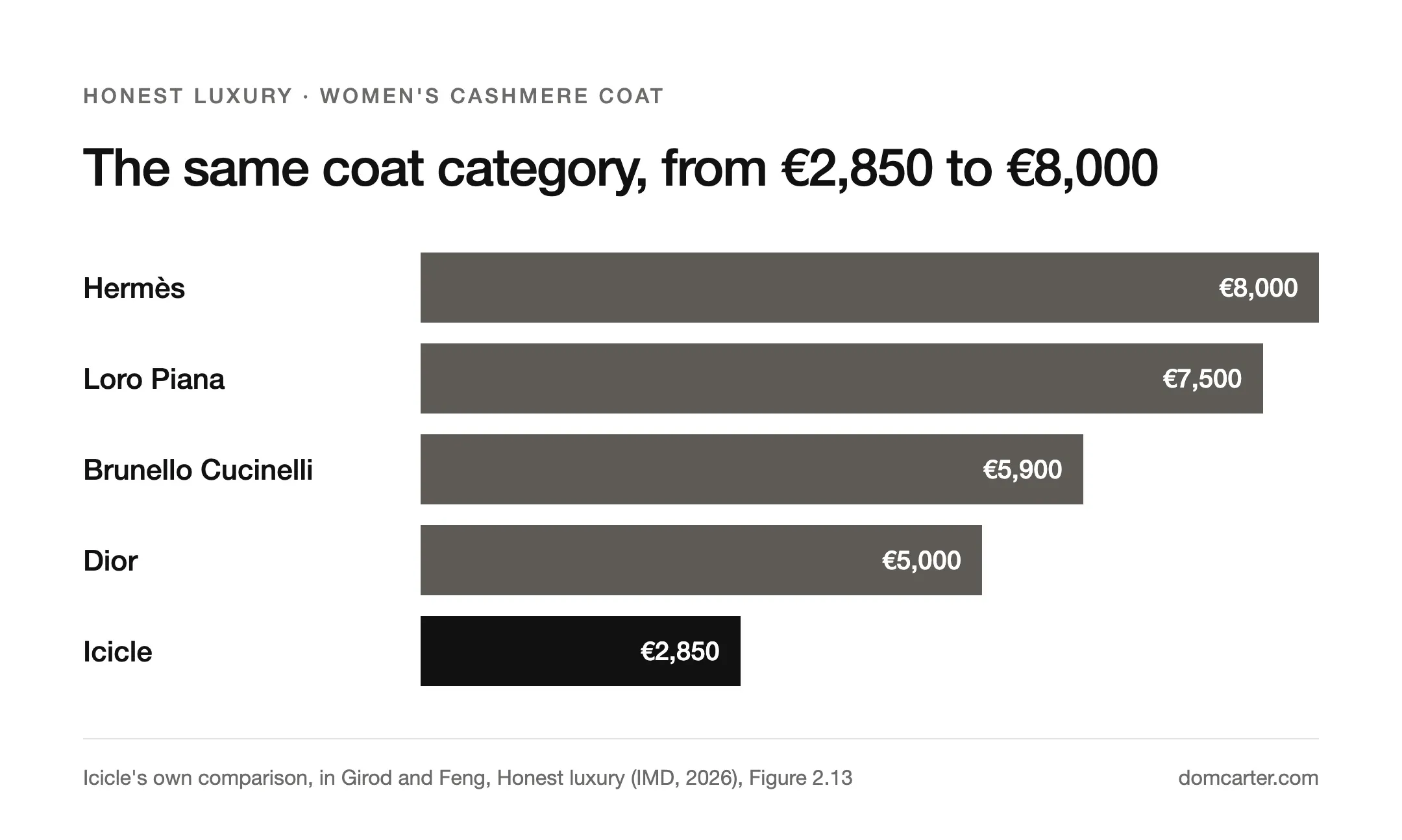
Icicle’s executive president says it competes on quality with Brunello Cucinelli, Zegna, Loro Piana and Max Mara. Its own factories make it a third cheaper to produce. I’m genuinely unsure whether that kind of undercutting helps or hurts at the very top. A coat at a third of the price might make an €8,000 one look like a logo tax. Or it might push the top houses further into rarity and leave the middle to fight it out.
Which Western luxury brands are most exposed?
The ones that rely most on Chinese shoppers. The paper shows how much the big groups lean on Asia, and how differently they did in 2025:
| Group | Share of sales | 2025 growth |
|---|---|---|
| Kering (Gucci) | 29% from Asia Pacific | Down 10% like for like |
| LVMH (Dior, Louis Vuitton) | 26% from Asia excluding Japan | Down 1% organic |
| Hermès | 42% from Asia excluding Japan | Up 9% at constant currency |
Gucci is where the damage is already showing. Kering fell 10% while Hermès, with even more exposure to Asia, grew. That suggests the very top of the market is holding. The pressure is on brands nearer the middle, where Chinese competitors are strongest.
Burberry is the one I’d watch most closely from a UK point of view. Greater China brought in £670m in its last financial year, around 28% of revenue, according to Burberry’s own figures. To be fair to Burberry, those sales grew 4% that year as its turnaround took hold, so it isn’t losing ground yet. But I think it’s the most exposed of the big British names. It sells into exactly the aspirational middle where honest luxury is growing fastest. If that market keeps shrinking and Chinese brands keep taking share, it will come out of brands like Burberry, Gucci and Dior first.
What should Western and UK luxury brands do next?
The paper’s advice for historic brands is long. These are the parts I’d act on as a marketer.
Make it rare again. The paper notes that LVMH spent 37% of its revenue on sales and marketing in 2025. When a brand is everywhere, it stops feeling special. Fewer, better stores and fewer, better messages will do more for desire than another campaign.
Justify the price. Honest luxury doesn’t mean cheap. It means the product, the service and the story behind it have to add up to the number on the tag. The paper points to Chanel’s return to growth under Matthieu Blazy as an example, combining fresher collections with some more affordable products.
Tell your own story, properly. Don’t borrow anyone else’s culture. Go deeper into your own, beyond the clichés, and treat it as something worth teaching rather than a backdrop for a product shot.
Build a community, not a campaign. Listen to customers and use what they make and say. Give them a reason to belong, not just something to aspire to. The Chinese brands are doing this with smaller budgets, and it’s working.
Girod’s new book, Purposeful Luxury (Wiley, 2026), goes further on the sustainability side, and the full paper is well worth an afternoon. Plenty of brands have relied on Chinese demand to carry their growth. For them, the uncomfortable message is that the logo alone no longer carries the price. Brands that can’t show what they’re worth will lose the middle of the market first, and that’s where most of their customers are.
What I mean by
- Honest luxury
- A name coined by Stéphane Girod and Yunfei Feng at IMD for the way a new group of Chinese brands sell high-end goods. Less status, more meaning. Less heritage, more relevance. The price has to be backed by the quality, craft and usefulness of the thing itself, not by the logo or the story told around it.
- Logo tax
- The part of a luxury price that pays for the name rather than the product. After two decades of price rises that weren't always matched by better quality, many shoppers now feel they're paying it. The Chinese brands in the IMD research build their pitch around not charging it.
- Heritage brand
- A luxury house whose authority comes from its history: a founding date, a workshop, a set of signature designs reworked for decades. Most of the big European names work this way. The IMD paper calls them historic brands and contrasts them with younger Chinese labels that earn their price through craft, technology and community instead.
- KOL
- Key opinion leader, the term used in China for an influencer. KOLs are paid creators with large followings. KOCs, key opinion consumers, are ordinary buyers who post reviews. Chinese brands in the research lean on smaller, newer creators and honest reviews rather than big paid names.
Questions people ask
- What is honest luxury?
- Honest luxury is a term from IMD professor Stéphane Girod and researcher Yunfei Feng for how new Chinese brands sell high-end goods. They put craft, quality, usefulness and a fair price ahead of logo and status, and they often prefer to be called cultural brands rather than luxury brands.
- Which Chinese luxury brands are growing fastest?
- In the IMD research, Laopu Gold's jewellery revenue rose 221% in 2025 and Songmont's online bag sales rose 90% in the first three quarters of the year. Mao Geping in beauty grew 30%, and car makers NIO and Seres's AITO are also growing fast.
- How do Chinese luxury brands do their marketing?
- They publish as often as European houses, but they lean on long-form articles on WeChat, smaller creators and genuine reviews rather than paid celebrities. Many build a following on social media, including Instagram, before opening stores abroad, and they give products distinctive names people can search for.
- Are Chinese brands a threat to Western luxury brands?
- In China, already. Most Western houses shrank there in 2025 while Chinese brands grew. Outside China it's early: awareness is low and most of these brands are young. The bigger risk, in the IMD paper's view, is that their idea of value becomes what shoppers everywhere expect.
- Which Western luxury brands are most exposed to Chinese competition?
- The ones that rely most on Chinese shoppers. Kering, which owns Gucci, makes 29% of sales in Asia Pacific and fell 10% like for like in 2025. Burberry makes about 28% of its revenue in Greater China, so it has the most to lose if the shift speeds up.